Showing posts with label Saikoku 33. Show all posts

Sunday, May 13, 2012

Okadera 岡寺 - Saikoku #7

20120501-untitled-6
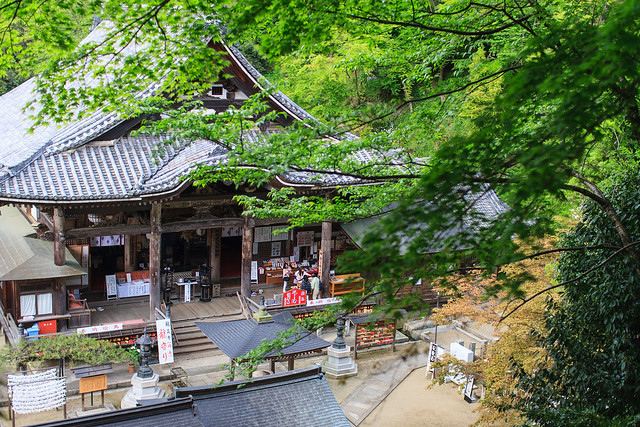
The Hondo of Okadera

Place Name: Oka-dera 岡寺
Type: Temple 寺
Location: Asuka Village, Nara Prefecture, JAPAN
Latitude: 34.471789
Longitude: 135.828372
Date of Visit: May 1, 2012
Access:
Take the Nara Kotsu bus from Kintetsu Kashihara Jingu Mae (橿原神宮前) east exit. Do not use Kintetsu Okadera station.
or
Walk 3~4km from Kintetsu Asuka (飛鳥) [This is the route we took. -David]
Fee: Adults ¥300
Hours: 8:00~17:00 (8:00~16:30 December through February)
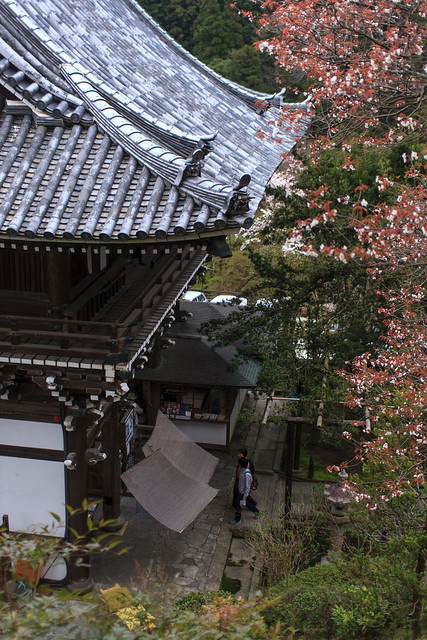
Okadera is tucked into a small v-shaped gorge cut into the mountains forming the eastern edge of Asuka village, one of the ancient capitals of Japan. The village itself is a candidate for world heritage status. From the valley floor the temple is located at the end of a steep paved access road dotted with a few omiyage stores, tiny restaurants and minshuku aimed at pilgrims, but mostly private residences, abandoned houses and forest.
20120501-untitled-3
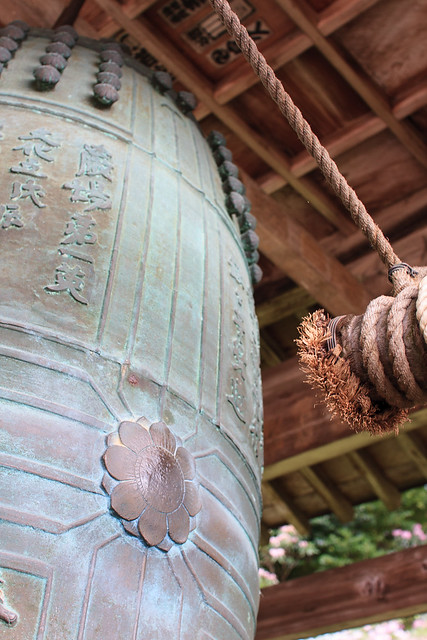
The temple bell

Behind the main gate is a set of stairs that leads to the temple grounds. The temple faces south and is built up against the slope behind it. In front of the temple is a four sided bell tower. Visitors are encouraged to sound it, with a small donation of course. Ringing the bell and focusing on the sound helps one calm down and get into right mindset to best enjoy this peaceful place. The temple itself does not have a bell to ring when you make your prayers like most do.
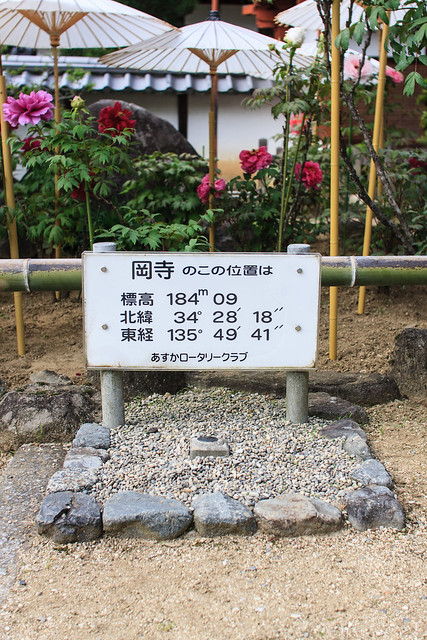
20120501-untitled-1
You are here


Inside the main temple building the enshrined image, a Nyorin Kannon, is the largest clay statue in Japan at 4.85 meters tall. The temple’s website clams the clay was made with soil from Japan, China and India. It was built at the end of the Nara era, which lasted from 710 to 794.

Okadera was founded in 633 and originally called Ryugaiji (龍蓋寺) literally, “dragon lid temple.” It was named as such for the pond on the temple grounds which was thought to be the home of a dragon. This dragon was not a destructive one however. In times of drought the lid was, metaphorically, opened and the dragon released to bring rain.  The pond still exists in front of the main temple building and is home to more than a few real carp. A single stone island shoots up from the murky waters and is wrapped with rope and paper in the Shinto style signifying spiritual significance. Perhaps as a manifestation of the dragon that sleeps below.
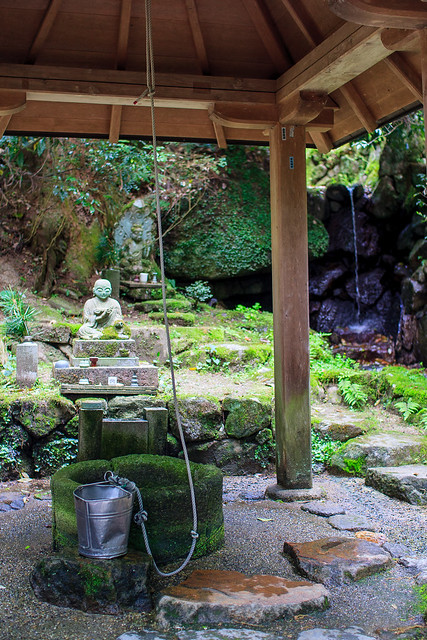
20120501-untitled-4
Well and Waterfall

Beyond the temple further into the mountains is a loop trail that that follows a small stream then climbs the slope on the opposite side of the main temple. First along this path is a tiny waterfall and well. There is no sign saying whether the water is safe to drink or not, but one sign does ask that you do not leave the bucket in the well.

20120501-untitled-5
Okunoin

Further back behind the well is the Okunoin (奥の院). This is the actual heart of the temple. Okadera’s is unique because of how accessible it is and because it’s built into a natural cave. Deep in the back of the cave is statue of Maiterya, a Buddha who will come to Earth in the in the future.
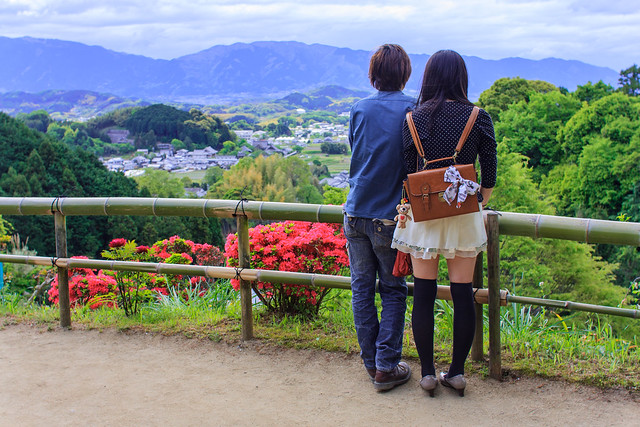
20120501-untitled-7
Looking west across the Nara Plain

After reaching the Okunoin the path heads up into the forest overlooking the main temple grounds. The trail passes a few gravesites and monuments and peaks at view looking west towards Asuka village and the mountains that make up the western border of the Nara Plain.
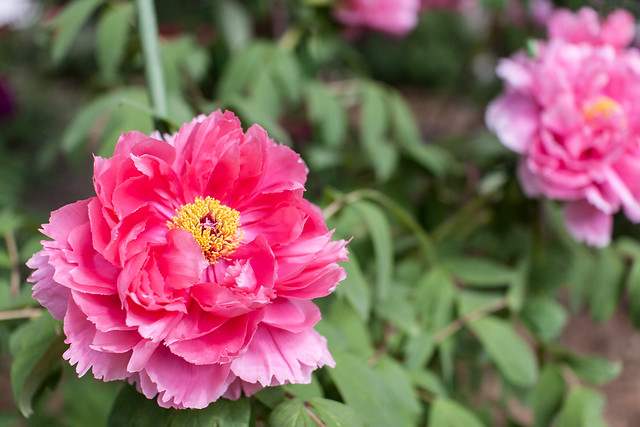
20120501-untitled-2
One of Okadera's 3,000 rohdodendrons

In spring the 3,000 rhododendrons (シャクナゲ) planted throughout the temple grounds bloom. Some plants are even shaded by white paper umbrellas to protect the flowers from the weather. They are typically in full bloom around Golden Week.

[One of the first temples I visited when accompanying my mother-in-law as she completed the Western Japan 33 route was Okadera. I had been to many temples before then but mostly large ones on the foreign tourist routes. Going to Okadera really kindled my interest in temples and has led to our family going on the pilgrimage ourselves and exploring many wonderful places. -David]
20120501-untitled-8
The village of Asuka as seen from Okadera

Saturday, April 28, 2012

Yoshimine-dera 善峯寺 - Saikoku #20

20120416-Yoshimine-dera-2
The Main Gate

Place Name: Yoshimine-dera 善峯寺
Type: Temple 寺
Location: Nishikyo Ward, Kyoto Prefecture, JAPAN
Latitude: 34.938172
Longitude: 135.644203
Date of Visit: April 16, 2012
Access: Hankyu Bus #66 from Hankyu Higashi Muko station or JR Muko-cho station
Fee: Adults ¥500 / Parking ¥500
Hours: 8:00~17:00

Every temple in the Saikoku 33 pilgrimage is a special place. The surrounding landscape, as I have mentioned before, is equally unique. The monks who nearly 1,000 years ago that established this temple also must have found the landscape intriguing enough to warrant such an outlay of labor, material and treasure to build these amazing complexes. Yoshimine-dera is located up a steep, tight valley west of downtown Kyoto. It’s on the opposite side of the Kyoto basin of the much more popular and well-known Kyomizu-dera. While being listed on some of the Kyoto city tourism websites in English this was my first time hearing of it, and that is only thanks to its inclusion as the 20th temple in the Saikoku 33 temple pilgrimage.

20120416-Yoshimine-dera-6
The terraced garden

Driving up to the temple requires trust of your maps and car navi. Kyoto, in general, is much tougher to drive in than any other area in Kansai. Small streets that really should be alleys and the local drivers who take them at breakneck speeds. After passing under the currently under construction Kyoto Jyukan Expressway the temple road (京都府道208号) really begins to pick up elevation. Along the way are signs advertising bamboo shoots (takenoko 竹の子) that are harvested from the surrounding forests. The neighborhoods on the foot of Mt. Nishiyama are locally famous for this spring vegetable. We picked up a decently sized bag for ¥1,000. The road’s steep final accent leads to two parking lots. The older lower lot has a good set of switchbacks to get to the temple, or you could skip them and use the upper lot.

20120416-Yoshimine-dera-5
Looking down on the Yuryu no Matsu

The temple complex takes 30-40 minutes to walk through and covers 30,000 tsubo or about 9 KM2--if I converted that correctly. The two guardian king statues that are placed on either side of the main gate were made by Unkei a Kamakura era sculptor. His painterly statues are considered some of the best in Japanese art and include many national treasures some of which are kept in the treasure hall in Kofuku-ji in Nara. From the main gate where the entrance fee is taken it’s a short walk to the main temple and where you get your scroll signed as we did. The main temple building is majestic and beautiful, but is overshadowed by the surrounding buildings and gardens.

20120416-Yoshimine-dera-1
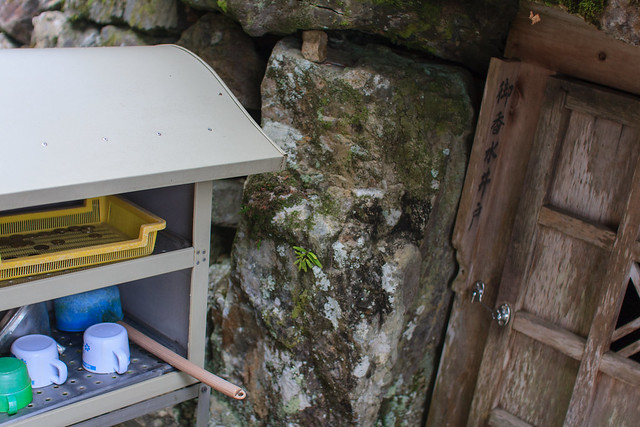
Okozui Well

Directly to the right of the main temple a door is built into the rock lined retaining wall. Behind that door is a natural well. The water, known as Okozui (お香水), is used in offerings to Buddha and believed to extend ones life. Next to the door is a tray for monetary offerings, a selection of cups, funnels and some ladles. Nearby, hidden under the temple stairs were a few 2-liter plastic bottles, the stash of temple visitor who left them there to fill up after they walked the grounds. The water was cool and had a soft feel in the mouth. It is rare that one can drink water that is unprocessed, un-bottled, untouched by anything other than nature. Drinking this well water alone makes the trip to Yoshimine-dera worthwhile.

Making prayers and the water here is also said to help cure neuralgia and chronic lower back pain. In fact, the temple used to offer a prayer and bath service once a month to the faithful. Sadly the service has been cancelled.

20120416-Yoshimine-dera-4
Yuryu no Matsu

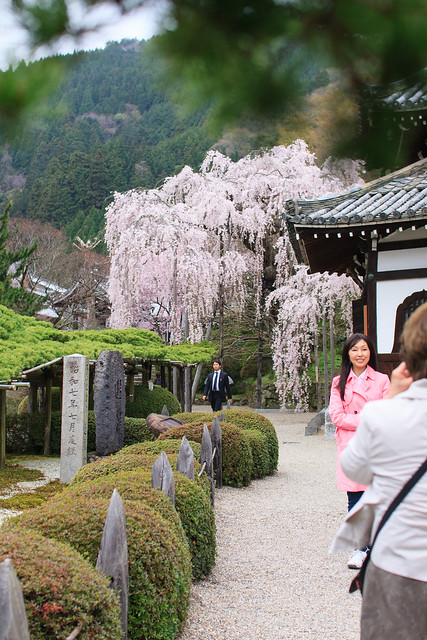
There are many other natural treasures found in the temple grounds. Sakura, ajisai, and momiji among other flowers are all cultivated on the grounds and attract viewers when they are in bloom. The most famous and greatest natural attraction is the 600 year old Japanese white pine, Yuryu no Matsu (遊龍の松). This tree spreads out in a flat 90-degree bend over along a terrace above the main temple. It is like a giant human sized bonsai tree. The age of this magnificent tree can be seen in its twisted knotted wood. Just like the bristlecone pines of California’s eastern Sierra, the Yuryu no Matsu has a sense of wisdom and age that is instantly apparent from first sight.

20120416-Yoshimine-dera-3
Yuyru no Matsu and a Weeping Sakura

Other gardens, temple buildings, small shrines, pagodas, and a toilet with an amazing view of downtown Kyoto, including the oft-maligned Kyoto Tower, are all here for exploration. Every one of the Saikoku 33 temples is an extraordinary place, but some are so amazing that they should be visited whether you are on the pilgrimage or not. Yoshimine-dera is one of those temples.
20120416-Yoshimine-dera-7
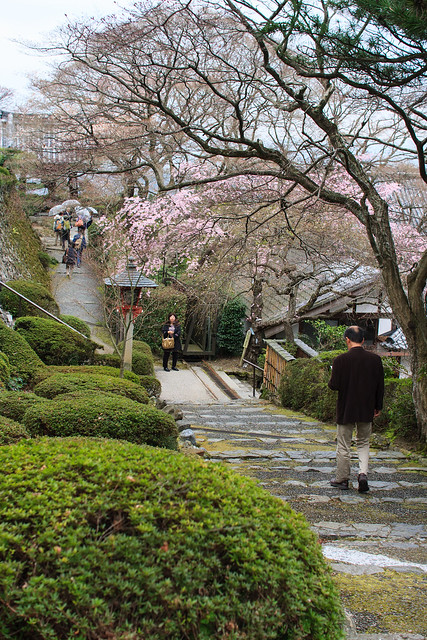
Looking towards the main gate

Thursday, January 12, 2012

Nariai-ji 成相寺 #28

12.30nariaiji-5
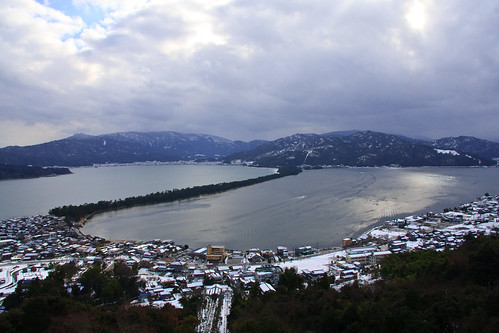
Amanohashidate from Kasamatsukoen
Nariai-ji is a secluded temple up the slope a mountain overlooking Amanohashidate 天橋立 in northern Kyoto prefecture on the Sea of Japan. The temple is part of the Kasamatukoen 傘松公園 area on the far side of Amanohashidate.

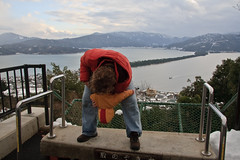
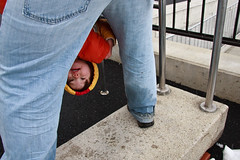
I guess I should begin by explaining what Amanohashidate is. It's a spit of sandy land that makes a small land bridge closing off a bay. One of Japan's most unusual geographical features and one of Japan's three most beautiful landscapes. I went there 6 years ago before I was married or had a job, and when I took too many photos. Here's 118 photos I uploaded to flickr from the experience. It was my first trip as an exchange student. Who would have thought that I would be coming back to the exact same place but going to a temple. I had gone there just to check out what this place was and look at Amanohashidate between my legs as the the custom says. I wasn't that interested in temples back then.
12.30nariaiji-6
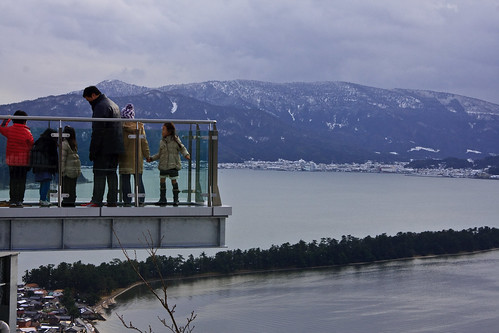
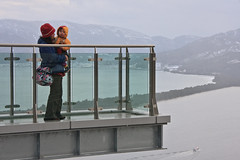
A family on the new viewing platform
12.30nariaiji-2
Walking up to the cable car
It was Yuko's first time here in 20 years or more. On the way there she told a story of here father taking the family there on a day trip and deciding the spend the night instead despite having no change of clothes or any overnight goods. They got the last room available in the city at the minshuku run by the attendant of the parking lot they used. Sounds fun.

Yuko was a little worred about the snow and getting there, but we had no problem. The freeways get you right there and the roads in the city were all plowed. It was actually a great time to go as there really weren't that many people there. Only a few families out and about as it was Dec 30th and everyone was heading to their homes for the New Year's celebrations.


12.30nariaiji-3
Cable car station
We parked our car and walked up to the cable car station. There we learned that there was a hitch in our plan. The cable car was running to the viewing area up the hill, but the bus that runs from there to the temple was out of service because of heavy snow. We still wanted to look down on Amanohashidate so we got the ticket up and went to the top. There we learned that the walk would take 30 to 45 minutes. Given the time and if we didn't linger too long at the temple we could make it. So hiking up the mountain we went.


12.30nariaiji-9
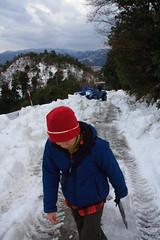
Yuko hiking up the mountain
It was a little tough and I ended up getting pretty sweaty under my heavy jacket plus a sleepy Mia on my back, but we got up there in 20 or 25 minutes. Not too bad. Getting down was the difficult part as it was harder to get a good grip on the icy road.

12.30nariaiji-15
The pagoda and a ton of snow
The temple itself has a gate down near the entrance then a few hundred yards up there's a pagoda and parking lot for those who want to drive up to the temple. The final stairs up the the main temple were rather steep and only a single track was shoveled out allowing the few people there to get up to the temple.

12.30nariaiji-14
The temple entrance
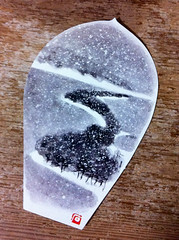
The temple, surrounded by snow in the afternoon sun, was georgous. A wonderful goal after a short, but hard hike. We walked in and waited to get out scroll signed. The monk who signed the scroll told us a story about the founding of the Saikoku pilgrimage. Well he told Yuko mostly as the Japanese was well above my understanding although it was little tough for Yuko also. After the story ended and he signed our scroll we received a special sange, a paper seal in a leaf shape with a image from the temple, that was printed about 20 years ago. The sange was part of a series commemorating the 1,000 year anniversary of the pilgrimage route. He gave us the sange as a special gift for visiting the temple. Maybe because he could tell we hiked up, or because I was a foreigner or just because he liked us, but we were really honored to hear the story from him and get the sange.
01.12nariaijisange-1
The sange

As part of a JR West promotion the Saikoku temples have been giving out smaller sange for the last two years or so. We've been collecting those also, but the special sange we got at Nariai-ji is something special that we'll always treasure.

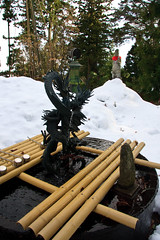
After exploring the inside of the temple we headed back into the snow. In front of the temple was a large tub with ladles for purification. The tub was originally the bath for the monks in the temple although they would never actually climb in it, but only ladle water from tub.

12.30nariaiji-13
The tub
We made our way back down well before the last cable car of the day, took a few photos at the viewpoint before getting off the mountain. We were so excited and happy about how well everything went and our experience at the temple. It was much better hiking to the temple from the viewpoint. Putting some effort into getting to each temple makes arriving there so much more fulfilling. You can get an idea of how the faithful before cars and trains had to struggle and suffer to complete this pilgrimage which is a pleasant day out for us in the modern world.

12.30nariaiji-11
Drying the ink

On the way home we had dinner in the local shopping center and stopped in Fukuchiyama, Kyoto to check out the super-sento there, Fukuchiyama Onsen. I'll post a review on I Love Yu soon.

 Links:
12.30nariaiji-10
The single track of stairs


12.30nariaiji-1712.30nariaiji-1812.30nariaiji-1612.30nariaiji-19
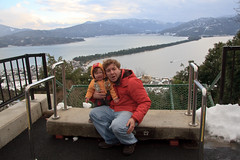
Some family shots from the viewing area. Mia slept most of the hike up and at the temple, but she woke up and started crying on the way down. We're both doing are boo-boo faces. She's also too small to look at Amanohashidate through her own legs so I let her use mine!

Saturday, January 07, 2012

Chome-ji 長命寺 #31

12.11Chomeji-4
Looking down from the bell tower
Chome-ji was originally built in 619 and the name of the temple means "long life." Located on a hill over looking a inlet of the large Biwa-ko lake, it offers a beautiful view and a peaceful retreat from city.

12.11Chomeji-1
The final stairs
Number 31 of the Western Japan Kannon pilgramage route Chome-ji is a few kilo from Omihachiman station in rural Shiga prefecture. The temple is located on a hill side and is traditionally accessed by walking the 808 stairs from shore of the lake. Nowadays, you can drive up most of the way, but that's too easy. The hike isn't too tough, but remember that they are old stone steps that are uneven and irregularly spaced. Good shoes and careful hiking is recommended, especially when heading down.

12.11Chomeji-3
The bell
The stairs climb through a bamboo, then pine forest as you get to the temple. The wind blows through the bamboo knocking it around and making a beautiful chanting-like soundtrack for your walk. The main temple and pagoda is surrounded by pines and some very unique exposed boulders. A garden with a pond runs behind the main temple and under one of the adjacent buildings. To the left there is a bell tower that anyone can ring and the right is a pagoda. The bell makes a most wonderful tone and must be experienced. The pagoda was burnt and rebuilt 3 times. It was restored and repainted in the 1960's (if I remember correctly) so it retains some of it's red color. My baby daughter Mia really got excited looking at the pagoda for some reason. She was gasping in awe and laughing at it as Yuko and I were reading the sign.

12.11Chomeji-2
Two workers cleaning and tending to the garden.
There is a nice open space with some benches where you can sit and look out on the lake and watch the sky. We arrived in the afternoon as the sun was lowering in front of us casting long shadows across the ground. A family was having a day out running up and down the stairs for fun and / or exercise. A few other visitors were about quietly taking in the temple and relaxing, peaceful atmosphere.

12.11Chomeji-6
The sun shining into the temple
The main image of a thousand armed Kannon is not viewable to the general public and is held behind a wall in the main building. For as big as the main building looks not much of it is accessible to visitors. It's one of the shallowest temples that I've been to and not much to see to be truthful. The real attraction here is the location.

12.11Chomeji-5
The main building
Make sure you bring water with you on your hike. We didn't bring anything and were thirsty the entire time. There is a public toilet in the upper parking lot with non-potable water. At the entrance to the stairs at the bottom of the hill there is a small omiyage shop with drinks and walking sticks. Parking at the omiyage shop is also free. We also took the wrong path initially up the hill walking up the street. The stairs actually begin to the right of the small jinja behind the shop. Ohmi buses run to the little park in front of the shop from Omihachiman station.

More information:
Sacred Japan
Biwako Visitors Bureau

Monday, October 03, 2011

08.02 Anaoji Garden

08.02Anaoji-2 by sleepytako
08.02Anaoji-2, a photo by sleepytako on Flickr.

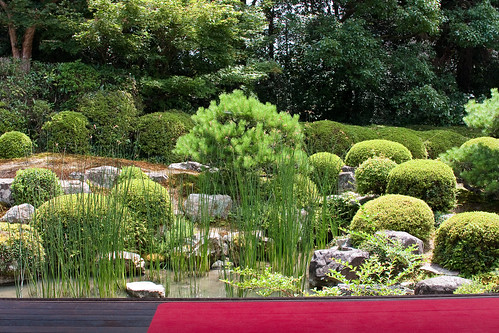
Taking photos of Japanese gardens is hard. So many people do it so well and that's all they do. I just liked the red carpet.

Wednesday, September 28, 2011

08.02 Anao-ji 穴太寺

08.02Anaoji-1 by sleepytako
08.02Anaoji-1, a photo by sleepytako on Flickr.
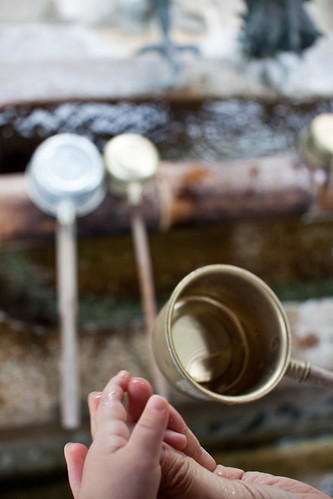
Mama washing Mia's hands before going to the temple to pray. 
Anao-ji temple, Kameoka city, Kyoto Pref.

Saturday, April 09, 2011

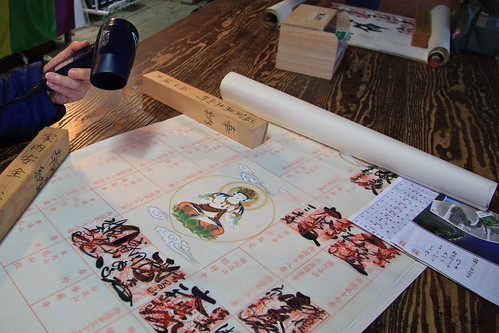
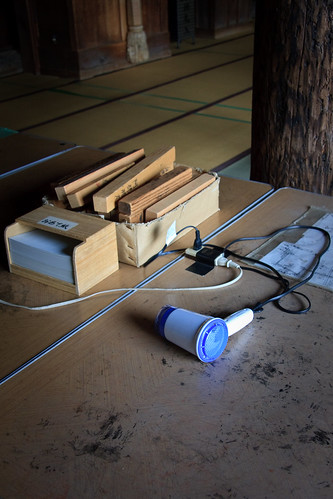
The tools of a pilgrim


03.29ichijoji-tools-1, originally uploaded by sleepytako.
Hair dryer for drying the ink on your tapestry, wooden block to hold the tapestry from rolling up, and sheets of scrap paper to put over the drying ink.

一乗寺、加西市、兵庫県
Ichijo-ji, Kasai, Hyogo
March 29, 2011

Monday, April 04, 2011

Ichijo-ji 一乗寺

A note to my readers: I am returning to blogging as usual in part as an effort to show to the world that the rest of Japan is getting on after the recent disaster. Our hearts and prayers are with the people in Tohoku--of course. That said, we cannot be in mourning forever. For the country to recover--mentally and economically--we need to return to normality as soon as we can in the areas unaffected by the earthquake. If there is one thing the Japanese can do best, it's their ability to bounce back after extreme trauma. Despite what you might be seeing in the foreign news media, people in Kansai and throughout Japan are living their lives going to work and enjoying this lovely time of year. Please join me in remembering the suffering of those in Tohoku while celebrating the beauty of this country that I call my home. 

03.29ichijoji-1

Along the Saikoku 33 Temple route in Kansai there are many temples. Some of them are in, or close to, major population centers and are attractions irregardless of their designation in the Saikoku 33. Others are in out of the way places tucked into tall mountains. Some are in some not so easily accessible places. While every temple offers a sense of beauty and transcendence, I have to say I enjoy the peacefulness of the latter. Ichijo-ji in rural Kasai city is a stellar example of one of these temples.

03.29ichijoji-2

Ichijo-ji is located not far from Kakogawa-kita IC on the Sanyo highway up a winding road and just past a newly built pet cemetery. The temple is at the end of a long set of stairs nestled into the surrounding mountains. It is said to have been founded in 650 B.C.E. The oldest remaining building is a 5-story pagoda built in 1171. The pagoda is registered as a national treasure.

03.29ichijoji-3

After climbing up the stairs, with my smiling 10 month old daughter strapped to my chest I might add, Yuko and I removed our shoes and entered the main temple. The cool wood boards, made smooth by the hundreds of feet that have walked upon them, felt great on our feet.

03.29ichijoji-4

Inside the cool mountain air circulated through the building and spreading the incense around the building. The calm and quiet was omnipresent. This truly is a spiritual place.

With all the sadness and suffering in Japan and the world around us at this time, taking time out to offer a silent prayer is the least we can do.

Ichijo-ji 一乗寺 Data:
Address:  821-17, Sakamoto, Kasai, Hyogo 675-2222 / 兵庫県加西市坂本町821-17 [ Google Map ]
Links: [ Wikipedia ] [ Hyogo Tourism ] [ Sacred Japan ]

Monday, April 26, 2010

The Way To Seigantoji

03.31Seigantoji-5
Looking down towards the parking lots.

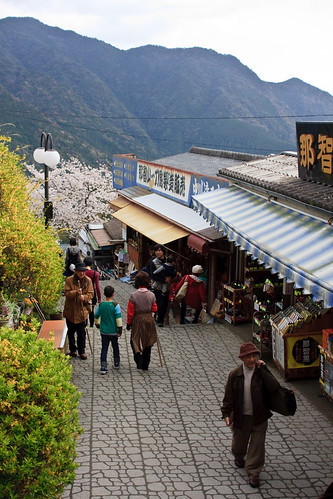
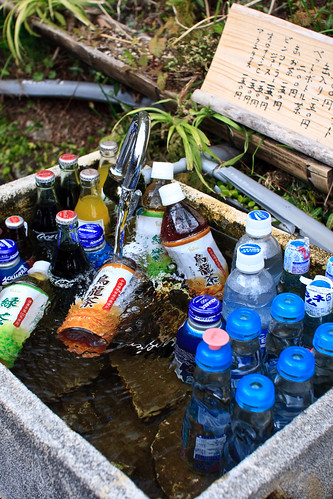
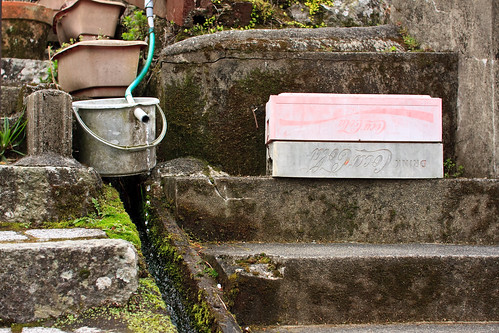
The walks leading up to popular temples are often dotted with souvenir shops and little stalls selling snacks. The stalls leading up to Seigantoji used the cool water flowing off the mountain to cool there drinks. Making them look much more appealing.

03.31Seigantoji-4
Cool drinks.

03.31Seigantoji-1
The water returning to the drainage canal.

Sunday, April 11, 2010

Saikoku 33 - Seigantoji and Kimiidera

04.04Kimiidera-2

Yuko and I began our own Western Japan 33 Temple Pilgrimage [西国33寺巡り] same as Yuko's mother had just finished. The pilgrimage goes to 33 temples plus 3 bangai, or extra, ones around the Kansai region. Each temple is devoted to Kannon [観音], worshiped in Japan and China as one of the few female Bodhisattva. Kannon is a compassionate figure who devotes herself to listening to the sorrows and prayers of us in the earthly realm.  It is said that Kannon can manifest herself in 33 different forms when she comes to the living world to help save people.

04.04Kimiidera-1

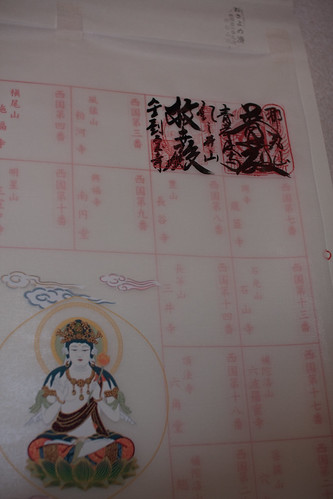
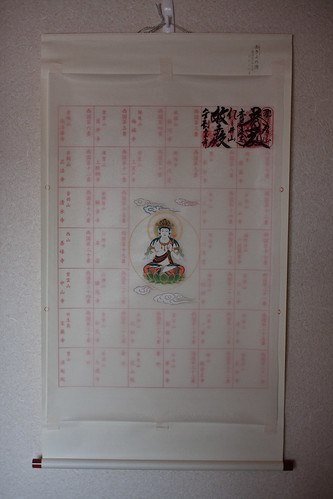
Pilgrims mark their trips to each temple using a book, a scroll or both to collect the special stamps and names of each of the temples. We purchased our scroll, the cheapest and smallest available, for ¥9,000 at the first temple Seigantoji [青岸渡寺]. Although the more expensive scrolls are bigger and more elaborate, Yuko's mother recommended getting the smaller one because it's easier to take with you and hang in your house. Our scroll is already hanging with it's 2 filled in squares. Looking at it is a promise for all the fun we will have getting the rest of those stamps. Hopefully, our child will be old enough to remember going to some of these temples by the time we finish it.

Seigantoji

03.31Seigantoji-14

This is the first temple in the pilgrimage located on Nachi-san at the end of the Kii Pensiulla in Wakayama Pref.. The near by Nachi Waterfall is a popular tourist attraction for Japanese and foreigners alike. It was the beauty of this place that lead a traveling monk paused to work on his faith. While meditating, he had a vision of Kannon and built the temple here in her honor.

03.31Seigantoji-17

The temple is high above omiyage store lined streets with their tourist buses. Going uphill it's a decent climb but one my pregnant wife could do. I guess it took us 10 minutes or so.

03.31Seigantoji-10

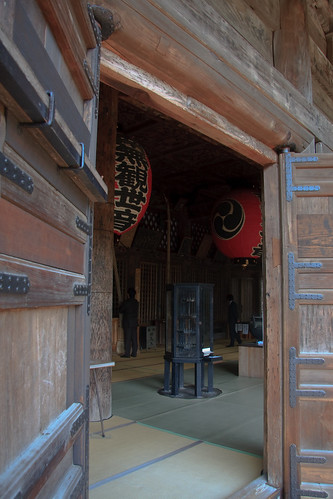
I enjoyed the massive paper lanterns inside the temple and how they were so delicately faded.

03.31Seigantoji-9
This "alligator mouth" type bell is the largest in Japan. The tone is quite wonderful.

Kimiidera

03.31Kimiidera-2

The second temple on the pilgrimage is also up a steep, but not as long, flight of stairs. Named for the 3 wells found on the temple grounds, Kimiidera [紀三井寺] is popular for its cherry blossoms in the spring. I wish we had more time to explore the grounds of this beautiful temple and all of the blooming sakura, but we had come to late to do that.

03.31Kimiidera-5

More photos can be found on flickr